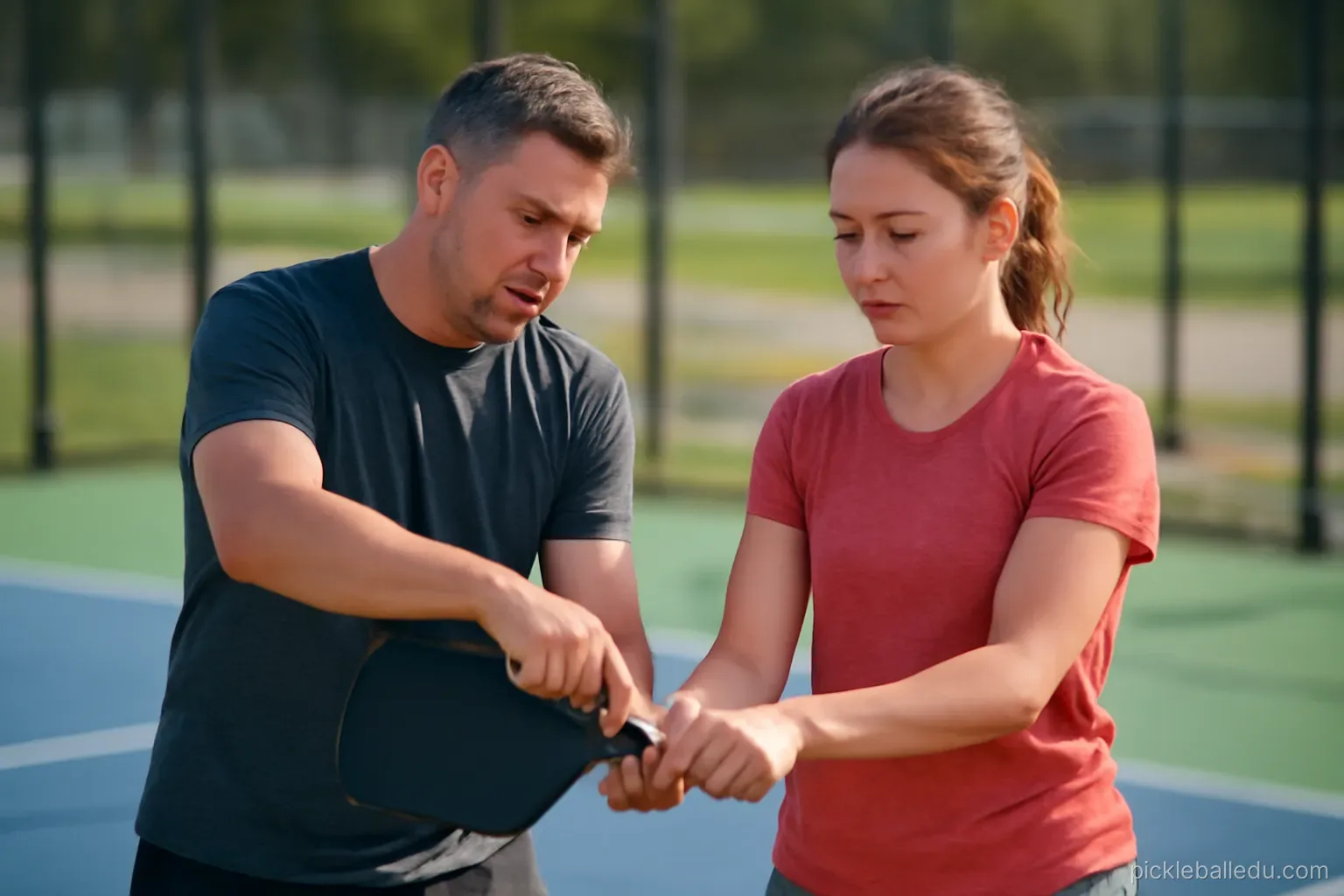
Most recreational players never take a lesson. They learn by playing, which works up to a point — and then stops working, because playing reinforces whatever you already do, including the parts that are wrong.
A small amount of good coaching at the right moment can be worth a year of practice. The problem is that coaching quality varies enormously and there is no reliable signal of it.
When coaching helps most
- At the very beginning. Learning a sound technique first is far easier than correcting an entrenched one later.
- At a plateau. When more play stops producing improvement, something in your technique or decision-making is the limiter — and you usually cannot see it yourself.
- After an injury. Often the movement pattern that caused it needs changing.
- Before a specific goal — a tournament, a rating jump.
- When one shot is consistently failing and you cannot work out why.
When it helps less: when you already know what is wrong and just have not practised it. Coaching cannot substitute for repetition.
Judging a coach
Playing well and coaching well are different skills. A strong player may have no idea how to teach — their own technique became automatic long ago and they cannot explain it.
Signs of a good coach:
- They ask what you want before telling you anything.
- They watch you play first rather than starting with a set curriculum.
- They change one thing at a time. Being given five corrections at once means learning none.
- They explain why, not just what.
- They give you something to practise between sessions.
- They adapt to your body — age, mobility, injury history.
- They tell you what you are doing well, not only what is wrong.
- They can explain the same idea a second way when the first does not land.
Warning signs:
- Mostly talking about themselves and their own playing.
- The same lesson regardless of who is in front of them.
- Overwhelming you with corrections.
- No structure or plan across sessions.
- Dismissive about limitations you have explained.
- Pressure to buy specific equipment.
- Being unpleasant to you, on the theory that it builds toughness.
Practical checks: ask about qualifications and what they cover, ask to watch a session before booking, ask for a contact who has been coached by them, and start with a single session rather than a package.
Formats and what they suit
Private lessons. Most personalised, most expensive per hour. Best for fixing something specific.
Semi-private with a partner. Cheaper, and useful because you can drill together afterwards.
Small group clinics. Good value, good for learning tactics and drills you can repeat. Less individual attention.
Large clinics. Good for an introduction or a specific theme; limited personal feedback.
Camps. Intensive and can produce fast progress, but a lot of information at once — plan how you will consolidate it afterwards.
Online video review. Cheaper, works surprisingly well for technique, and lets you rewatch. Cannot correct you in real time.
Getting value from limited sessions
Most people take a few lessons, not many. That makes preparation matter.
Before:
- Decide what you want from it and say so clearly.
- Bring video of yourself playing if you have it — enormously useful.
- Mention any physical limitations up front.
- Warm up beforehand so you are not spending paid time warming up.
During:
- Ask when you do not understand. Nodding along wastes the session.
- Ask what it should feel like — that is often the key to reproducing it alone.
- Record the key parts if the coach agrees. You will forget.
- Ask what to practise and how to know you are doing it right.
- Say if a cue is not working for you. A good coach will find another.
After:
- Write down two or three points the same day.
- Practise the change deliberately before playing games — game situations pull you back to old habits.
- Expect to play worse briefly. Changing a technique always dips before it improves, and this is where most people abandon the change.
- Give it several weeks before judging.
Coaching yourself between sessions
- Film yourself. The gap between what you think you are doing and what you are doing is usually large.
- Drill with purpose — a specific target and a way of scoring it beats hitting balls casually.
- Practise the uncomfortable shot, not the one you enjoy.
- Get a drilling partner — this is the cheapest improvement available in the sport.
- Use a wall for volume and consistency.
- Keep a simple log of what you worked on.
Being coached as an older player
- Say what your body will and will not do. A good coach will build around it.
- Positioning and shot selection often beat athleticism — and improve at any age.
- Expect slower motor learning and more repetition. This is normal, not a sign of anything.
- Do not accept being told you are too old to change something. Find a different coach.
If you are considering coaching others
- Playing well is not enough. Learn how people acquire skills.
- Get qualified where a recognised pathway exists, and get insured.
- If coaching children, complete safeguarding requirements — this is not optional.
- Start by assisting an experienced coach.
- Learn to observe. The hardest coaching skill is seeing what is actually happening rather than what you expect.
- Be honest about your limits and refer on when someone needs more than you can give.
One thing worth remembering
The purpose of a coach is not to be with you when you play. It is to give you a way of practising that keeps working after they have gone.
Judged that way, the best session is the one that leaves you with one clear thing to do and a way to tell whether you are doing it.
Câu hỏi thường gặp
When does coaching help most?
At the very beginning, before habits are entrenched, and at a plateau when more play stops producing improvement — because the limiter is usually something you cannot see yourself.
Does a strong player make a good coach?
Not necessarily. Playing well and coaching well are different skills — a strong player's own technique became automatic long ago and they may be unable to explain it.
What is a clear warning sign?
Being given many corrections at once. A good coach changes one thing at a time, because five corrections at once means learning none.
Why do I play worse after changing technique?
Changing a technique always dips before it improves. This is where most people abandon the change — give it several weeks before judging.
What is the cheapest improvement in the sport?
Finding a regular drilling partner. Purposeful drilling with a target beats hitting balls casually, and it costs nothing.