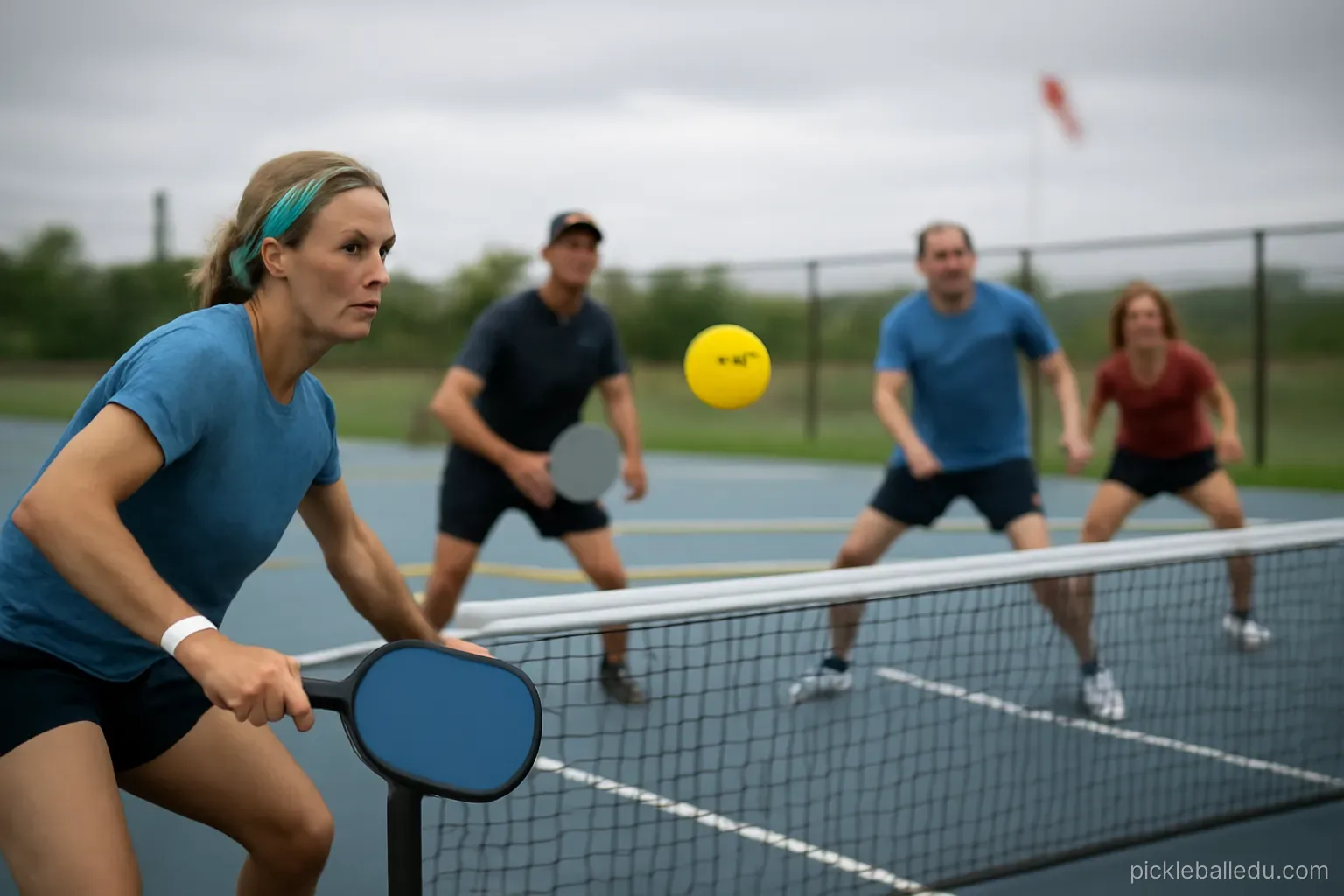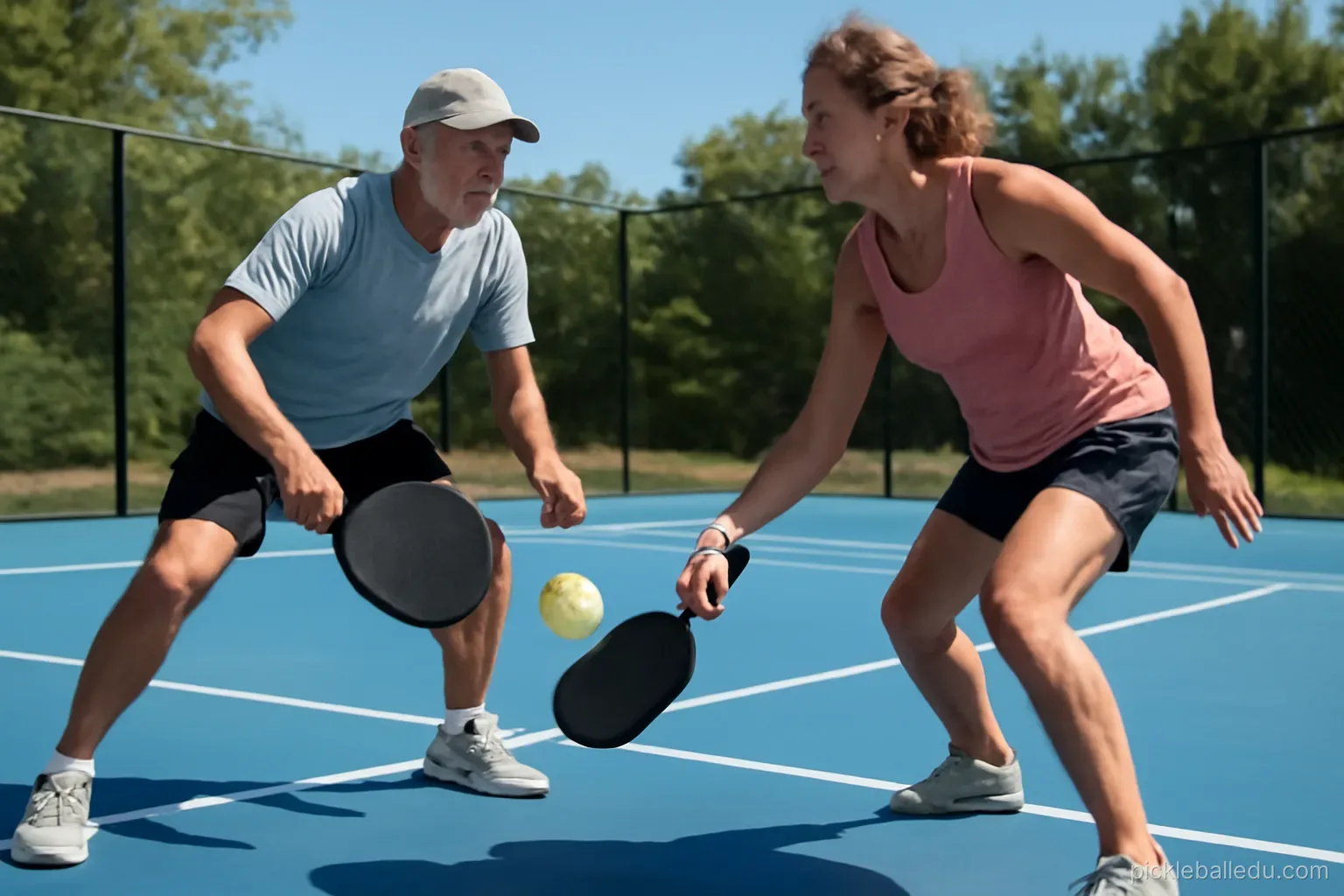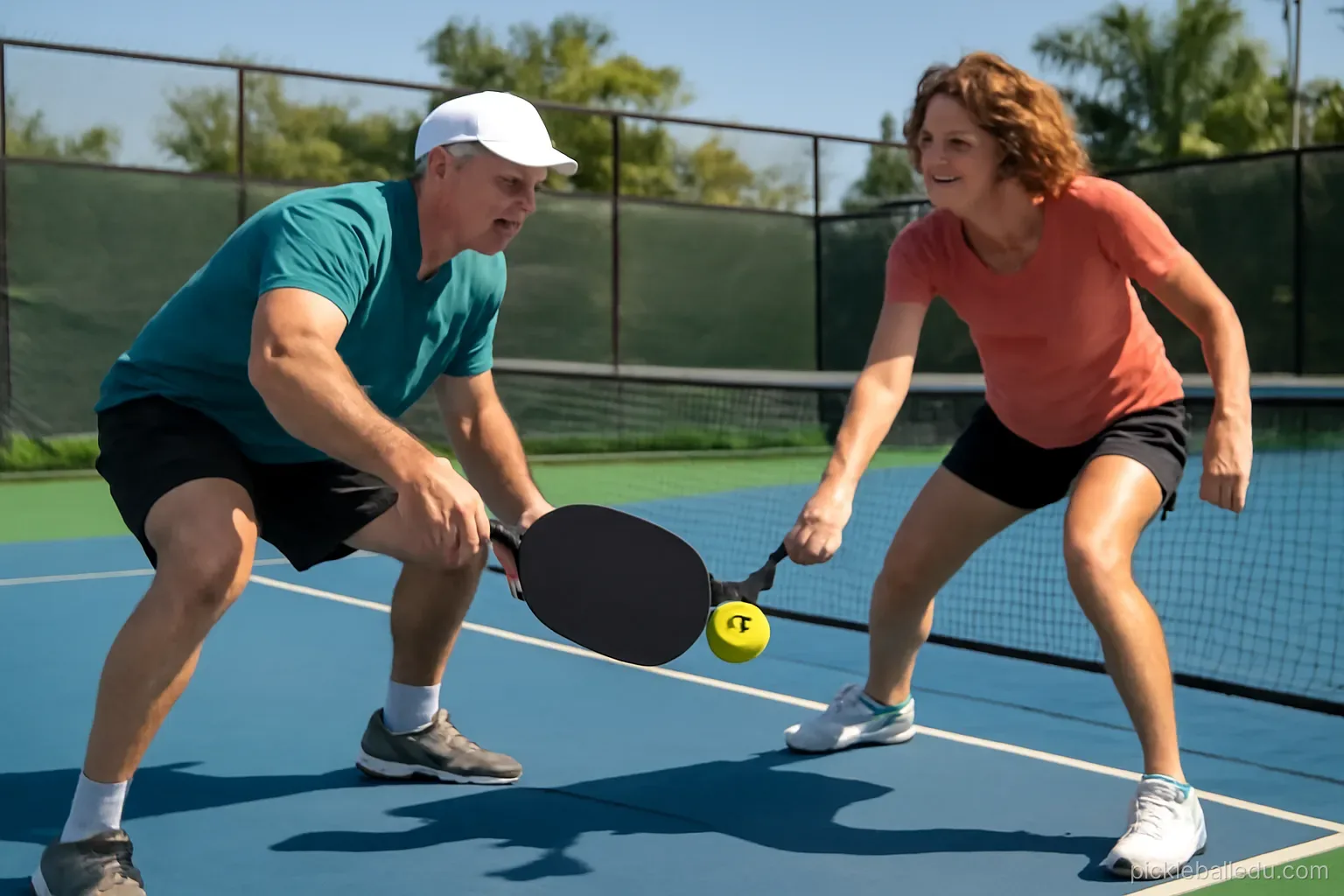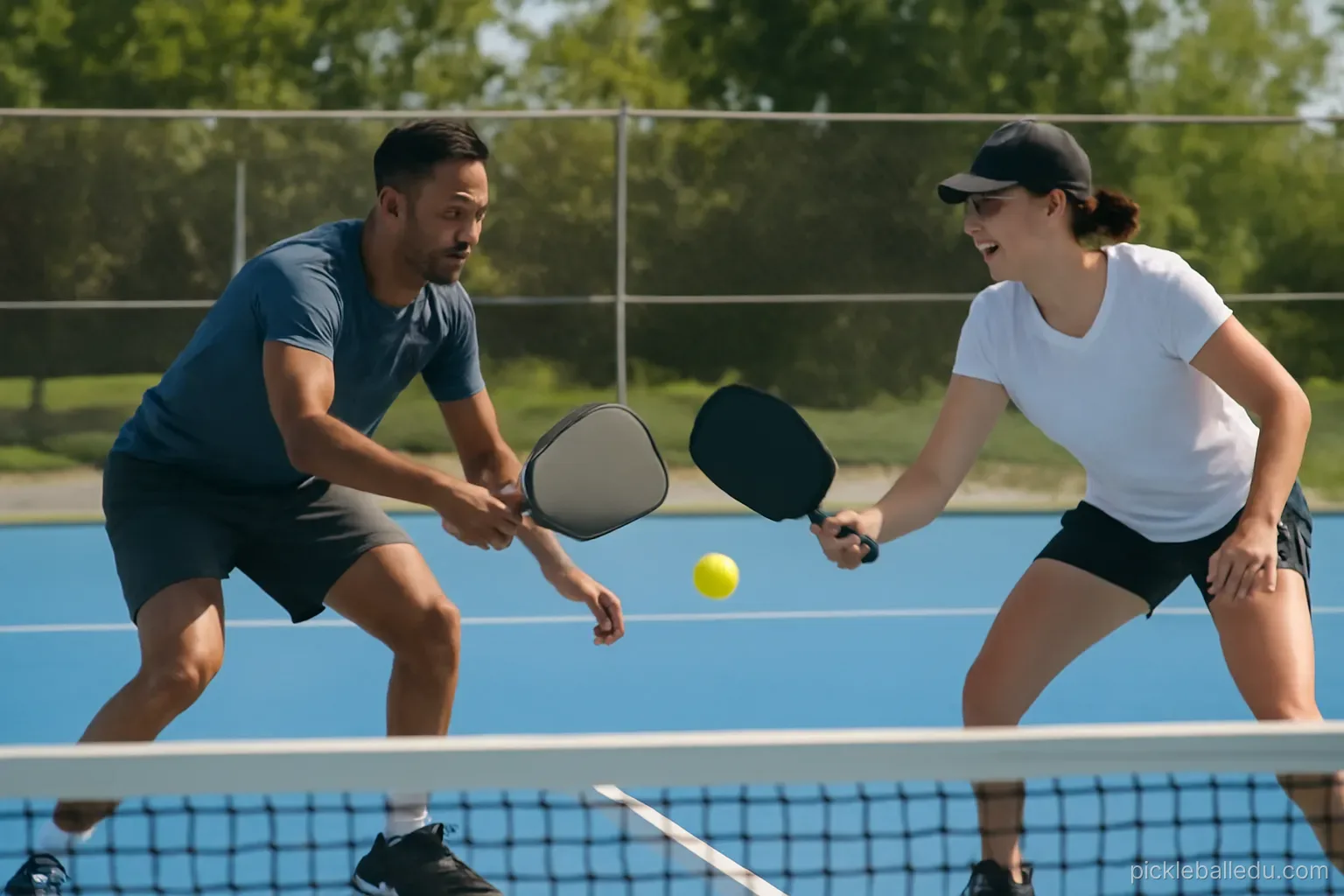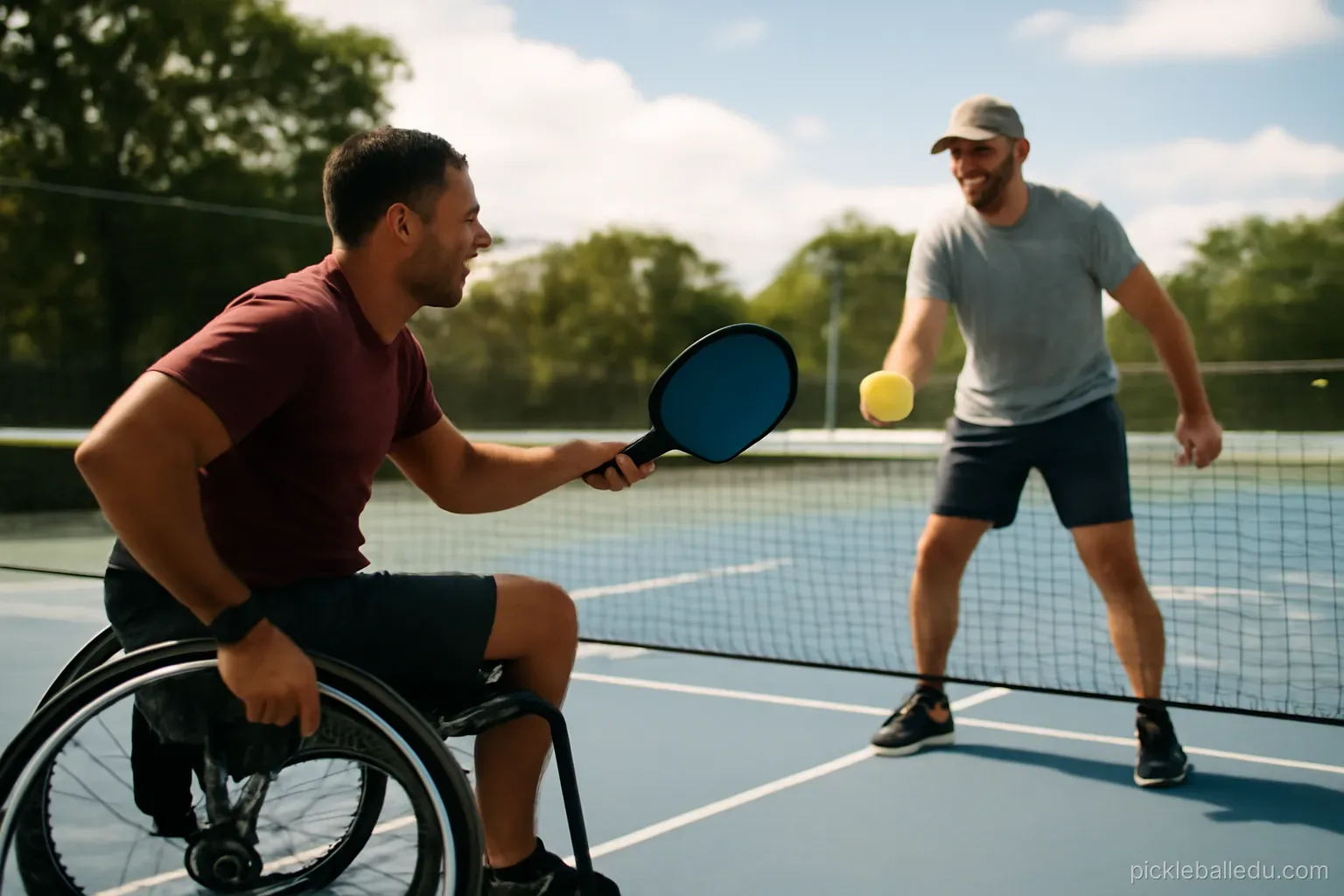
Pickleball is frequently described as a sport anyone can play. The court is small, the ball is slow, and the barrier to a first rally is genuinely low.
But accessible is something a club builds, not something a sport simply is. Plenty of people who could enjoy this game never make it past the first session — usually because of things that were easy to fix.
Wheelchair pickleball
The game adapts well to wheelchair play, and mixed play between standing and seated players is common and enjoyable.
Key adaptations generally used:
- Wheelchair players are typically allowed two bounces rather than one.
- The wheels count as part of the player for the purposes of the non-volley zone.
- Court surface matters more — smooth and well maintained.
Note: specific competition rules vary by governing body and change over time. Check the current rules of the organisation you play under rather than relying on any summary.
What clubs need in practice: a step-free route to the court, doorways wide enough, an accessible toilet, and somewhere to transfer. These are usually the real barriers, not the game itself.
Players with limited mobility
Many people can play well with small adjustments:
- Standing play with a reduced court in social settings — an agreed area a player covers, with partners covering the rest.
- Seated play on a chair for people who cannot stand for long.
- Slower ball or softer play in mixed sessions.
- Shorter games with more frequent breaks.
- A chair on court for rest between games without leaving the group.
The principle: in social play, the group can agree whatever adjustments let everyone participate. There is no rule requiring recreational games to be played exactly as written.
Players who are blind or have low vision
- High contrast balls against the court surface make a large difference.
- Good lighting and avoiding play directly into low sun.
- Verbal cues from partners — calling the ball, calling positions.
- Consistent court layout so orientation is reliable.
- Clear boundaries that can be felt where possible.
- Adapted formats exist in some places, including sound-based approaches — worth investigating locally.
Players who are deaf or hard of hearing
- Visual signals for score and for calls, agreed in advance.
- Face the person when speaking — many people lipread partially.
- Written score display where possible.
- Get attention visually before speaking, rather than calling out.
- Do not rely on hearing the ball for calls — make sure signals are visual too.
Neurodivergent players
An often overlooked group in sport:
- Predictable structure helps — knowing the format, timings and rotation in advance.
- Sensory load matters — indoor courts can be extremely loud. Quieter sessions or ear protection help.
- Clear, literal instructions rather than implied social rules.
- Written information about how the session works — many people will not ask.
- Space to step away without it being a problem.
- Do not require social chat as the price of entry to a session.
Players with chronic conditions
- Flexible participation — being able to play half a session without explanation.
- Somewhere to sit and somewhere to keep medication accessible.
- No pressure to explain why someone is stopping.
- Understanding about cancellations — variable conditions mean variable days.
- Awareness among regular partners of what to do if there is a problem.
What clubs can actually do
Physical access — check honestly:
- Route from parking to court, including steps and gradients.
- Door widths and any thresholds.
- Accessible toilet and changing space.
- Seating on and near court.
- Lighting quality.
- Somewhere quieter to wait.
Information — the cheapest fix with the biggest effect:
- Publish access information clearly. People decide whether to come based on what they can find out beforehand.
- Name a contact person who can answer questions privately.
- Describe what a session is actually like — how loud, how competitive, how structured.
- Say explicitly that adaptations are welcome. Most people will not ask unless invited.
Culture — the part that decides whether people return:
- Have someone greet newcomers rather than leaving them at the edge.
- Offer help, then respect the answer. Ask, do not assume.
- Talk to the person, not their companion.
- Do not make someone a topic of discussion or an inspirational story. They came to play.
- Include people in the rotation normally.
- Address unkind behaviour — a culture is set by what gets tolerated.
Running genuinely mixed sessions
- Agree adaptations at the start, briefly and without ceremony.
- Keep it about the game — competitive, fun, played properly.
- Rotate partners so nobody is always paired the same way.
- Do not soften play to the point of condescension. Playing down to someone is its own kind of exclusion.
- Ask what works rather than deciding for people.
For players considering starting
- Contact the club before turning up and ask what you need to know.
- Ask directly about access — good clubs will not mind.
- Visit and watch first if that helps.
- Bring someone with you to the first session if you prefer.
- Try more than one group — clubs differ enormously in atmosphere.
- Talk to your doctor first if you have a condition affected by exercise.
One thing worth remembering
Most exclusion in recreational sport is not deliberate. It comes from nobody having thought about it — a step nobody noticed, information nobody published, a rotation someone quietly got left out of.
Which is also why it is fixable. A club that asks the question honestly can usually remove most of its barriers in an afternoon.
Câu hỏi thường gặp
How does wheelchair pickleball work?
Wheelchair players are typically allowed two bounces rather than one, and the wheels count as part of the player for the non-volley zone. Specific rules vary by governing body, so check the current rules where you play.
Can standing and seated players play together?
Yes, mixed play is common and enjoyable. In social settings the group can agree whatever adjustments let everyone participate.
What helps players with low vision?
High contrast balls against the court surface, good lighting, avoiding play into low sun, verbal cues from partners, and a consistent court layout for reliable orientation.
What do neurodivergent players often need?
Predictable structure known in advance, awareness of sensory load since indoor courts can be very loud, clear literal instructions, and space to step away without it being a problem.
What is the cheapest thing a club can fix?
Information. Publishing clear access details, naming a contact person, describing what a session is actually like, and saying explicitly that adaptations are welcome.