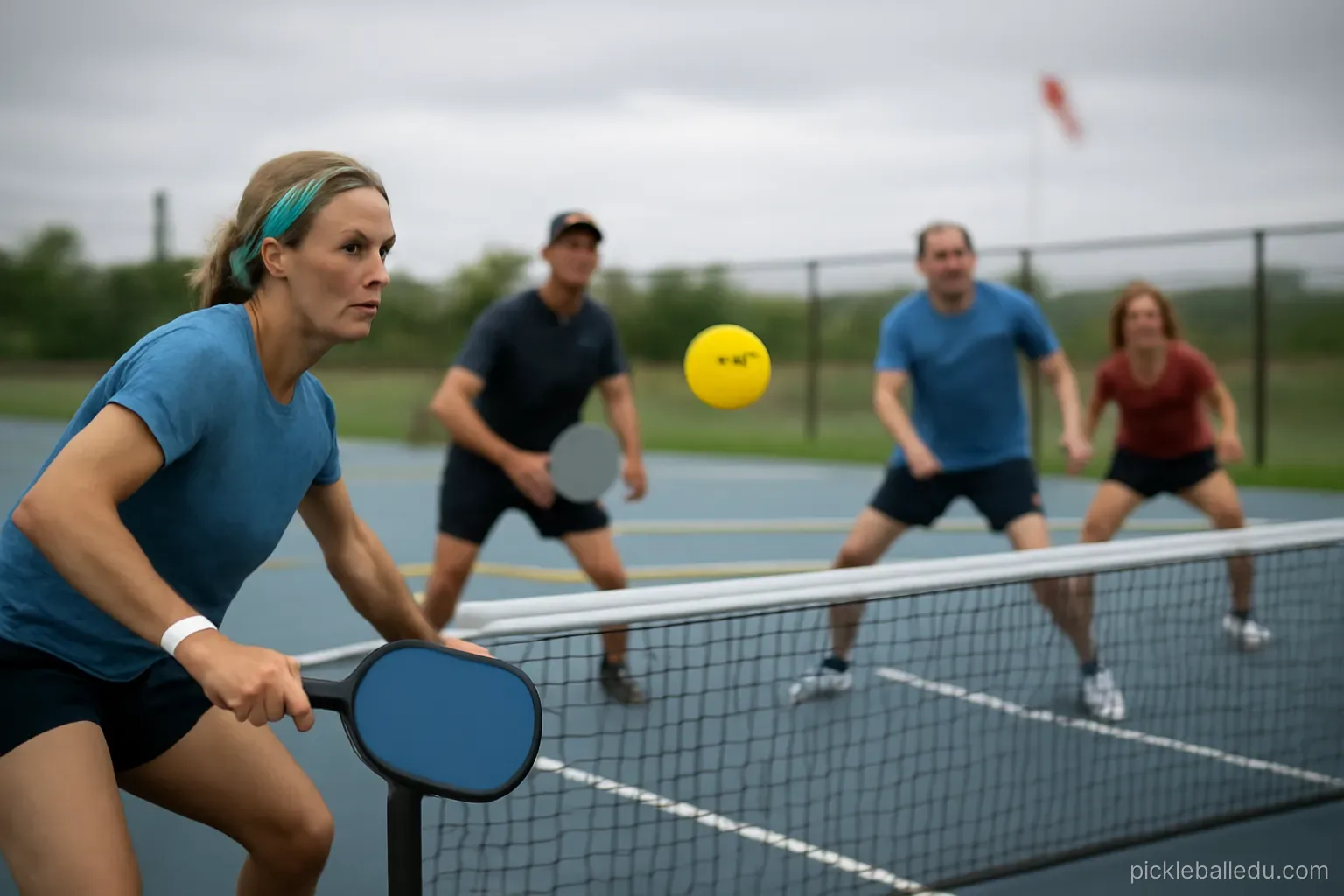
Indoor players get consistent conditions. Everyone else plays in whatever the day provides — and the players who adapt fastest to conditions win a lot of games against technically better opponents.
Some of this is tactics. Some of it is knowing when not to play at all.
Wind: the biggest tactical factor
Wind affects a light plastic ball more than almost any other sport's equipment. It changes what shots are sensible.
Playing into the wind:
- The ball drops shorter than expected — commit more to your shots.
- Drives become more effective; the wind holds them in.
- Drops are harder to judge and often fall short into the net.
- Serves need more.
Playing with the wind behind:
- Everything carries. Take pace off.
- Drops become dangerous to attempt — they sail long.
- Aim shorter than feels right.
- Lobs are very risky.
Crosswind — the hardest:
- Aim off, into the wind side.
- Expect the ball to move after the bounce.
- Communicate more with your partner; balls arrive where neither expected.
General wind tactics:
- Keep the ball low. Anything high is at the wind's mercy.
- Reduce lobs and high dinks dramatically.
- Play more percentage shots, fewer fine touches.
- Expect more unforced errors from everyone, including your opponents — patience wins wind games.
- Note which end is which and adjust immediately after changing ends. The first two points after a switch are where games are lost.
- Watch the ball longer. It will move late.
Sun
- Wear a cap or visor — the simplest and most effective fix.
- Sunglasses designed for sport, if you can play in them.
- Learn to turn your head rather than looking directly into it on overheads.
- Let a ball go rather than swinging blind into the sun — the risk of injury from a ball in the eye is real.
- Tell your partner which side has the sun problem so they can cover.
- Sunscreen, reapplied — sessions run longer than you plan.
- Watch for glare off wet surfaces after rain.
Heat
Covered in more detail in the safety article, but the essentials:
- Drink before you feel thirsty.
- Shade breaks between games, not only when you feel bad.
- Avoid the hottest hours.
- Build up gradually when the season turns — acclimatisation takes days.
- Stop for confusion, dizziness, nausea or a headache. These are not things to play through.
- Check on older players and newcomers — highest risk, least likely to say anything.
Cold
Less discussed but it changes both play and injury risk.
- Warm up longer. Cold muscles injure easily and a quick rally is not enough.
- Layer so you can shed as you heat up.
- Keep your hands warm — grip and touch deteriorate badly when cold, and gloves between games help.
- The ball behaves differently. Cold plastic is less lively and can become brittle; balls crack more often in cold weather.
- Expect shorter rallies and adjust expectations.
- Watch for surfaces that look dry but are not — frost and black ice near shaded edges are a serious slip risk.
- Cool down properly and change out of damp clothing quickly.
- People with cardiac or respiratory conditions should get advice about exertion in cold air.
Rain and wet surfaces
This is a safety question rather than a tactical one.
- Wet courts are genuinely dangerous. Lateral movement on a slippery surface is how serious injuries happen.
- Stop when it starts rather than finishing the game.
- A dried surface can still be slick — check by walking on it before playing.
- Watch for damp patches in shaded corners that dry last.
- Moss and algae in damp climates are extremely slippery, especially just after rain.
- Wet balls behave unpredictably and get heavier.
- Lightning means stop immediately and get indoors — not under a tree or a metal shelter. Wait well after the last sound of thunder before returning.
Indoor play differences
- Different balls — indoor balls are typically lighter with larger holes and behave differently.
- The game is generally faster with no wind to slow anything.
- Lighting matters. Glare and shadows create real problems; scout an unfamiliar venue.
- Surfaces vary — some sports hall floors are more slippery than they look.
- Noise is a real issue indoors, both for communication and for comfort. Ear protection is reasonable in loud halls.
- Watch for walls and obstacles close to the court — running into them causes more injuries than the game itself.
- Ventilation and heat — indoor halls can get hot with no breeze at all.
Deciding whether to play
Agree these thresholds in advance rather than debating them on the day:
- Do not play on wet or slippery surfaces.
- Stop for lightning, immediately.
- Have a heat threshold at which the session is cancelled or shortened.
- Consider air quality where that is an issue — poor air affects people with respiratory conditions long before others notice.
- Very strong wind makes the game unrewarding and increases injury risk from awkward reaches.
- Poor light — playing in fading light is how eye injuries occur.
Group dynamics: someone will always want to keep playing. Having an agreed policy removes the social pressure to continue in conditions that are not safe.
Making conditions an advantage
- Practise in wind deliberately. Most players avoid it, so those who can play in it gain an edge.
- Learn which of your shots survive difficult conditions and lean on them.
- Stay patient. In bad conditions, the player who makes fewer errors usually wins without hitting a single spectacular shot.
- Watch how conditions change during a session — wind often builds through the day.
- Accept it. Frustration at conditions costs more points than the conditions do; your opponents are in the same wind.
One thing worth remembering
Everyone plays well on a still, mild day. Matches are decided on the difficult ones — and mostly by whoever stopped fighting the conditions first and started playing with them.
Câu hỏi thường gặp
How should tactics change in wind?
Keep the ball low, reduce lobs and high dinks dramatically, play percentage shots rather than fine touches, and be patient — everyone makes more errors in wind.
Where are wind games most often lost?
In the first two points after changing ends. Note which end is which and adjust immediately rather than discovering it mid-rally.
Is it safe to play on a court that has dried after rain?
Not necessarily. A dried surface can still be slick — check by walking on it first, and watch shaded corners and any moss or algae, which are extremely slippery.
What changes in cold weather?
Warm up longer since cold muscles injure easily, keep hands warm because grip and touch deteriorate badly, and expect the ball to be less lively and more prone to cracking.
What is different about indoor play?
Indoor balls are typically lighter with larger holes, the game is faster with no wind, lighting glare can be a real problem, and walls or obstacles close to the court cause more injuries than the game itself.