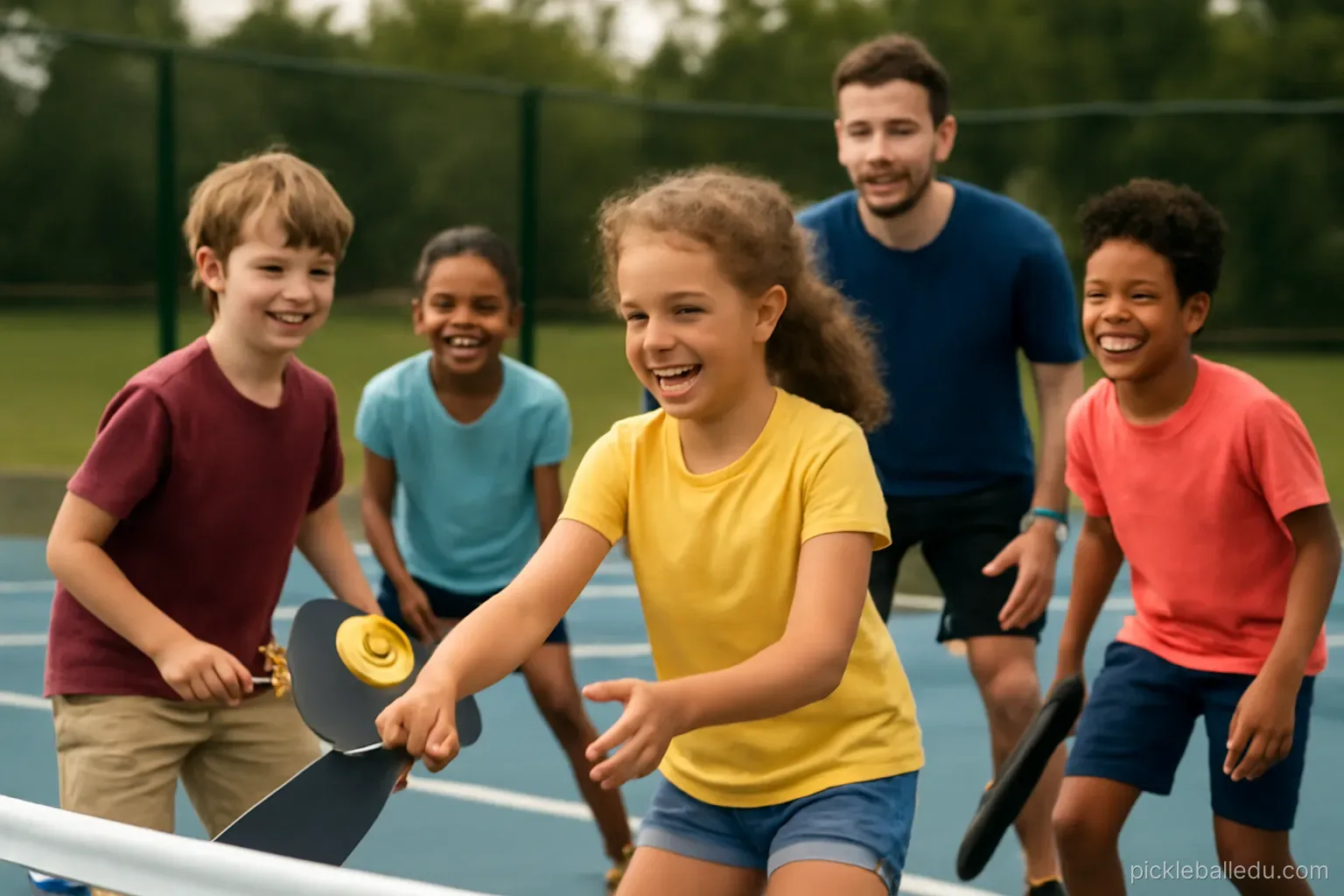
Pickleball is a genuinely good sport for children: the court is small, the ball is slow, rallies happen quickly, and a beginner can have fun in their first ten minutes.
But the way adults are coached does not transfer. Children who are ranked, drilled and pushed early tend to leave the sport early — and the things that keep them playing are not the things that keep adults playing.
The first principle: no rankings, no league tables
This matters more than any technical point.
- Ranking children publicly damages the ones at the bottom and distorts the ones at the top.
- Children who see themselves as bad at something at eight often stop trying at ten.
- Early performance predicts adult ability poorly — much of it is just growth timing.
- The best predictor of who is still playing at twenty is whether they enjoyed it at ten.
Instead: describe what a child can now do that they could not before. Progress against themselves, in words, not numbers or positions.
What actually keeps children playing
- Friends. The single biggest factor. Sessions that build friendships keep kids far better than sessions that build skills.
- Playing, not queuing. Time actually hitting a ball is the point. Long lines are where enthusiasm dies.
- Feeling competent. Success needs to be visible and frequent.
- Choice. Some say in what they do increases commitment noticeably.
- A coach who knows their name and notices them.
- Fun that is genuinely fun, not fun as a reward at the end of drilling.
Structuring by age
Youngest children:
- Very short activities — attention spans are short and that is normal.
- Games with movement, not technical instruction.
- Lower nets, shorter paddles, softer balls.
- Everyone active at once; no waiting.
- Simple, one-idea instructions.
- Praise effort and participation.
Middle childhood:
- Basic technique becomes useful, taught through games.
- Cooperative rallies — how many can we get — before competitive points.
- Small-sided games with modified rules.
- Introduce simple tactics.
- Keep sessions varied.
Teenagers:
- They can handle real technical work and understand why.
- Give them a say in goals.
- Competition becomes appropriate — with the pressure kept proportionate.
- Social element remains crucial; do not remove it in favour of seriousness.
- Watch for the drop-off age when other commitments compete.
Safeguarding basics
Anyone coaching children has responsibilities. Check the specific requirements that apply where you are — they vary by country and by organisation — but these principles are broadly consistent:
- Background checks for anyone working with children.
- Avoid being alone with a child where you cannot be seen. Two adults present is the standard to aim for.
- Clear rules on physical contact — explain and ask before any hands-on correction, and prefer demonstration instead.
- No private messaging with children. Communicate through parents.
- Photography rules — permission from parents, and no images that identify a child alongside their location or schedule.
- A named person to report concerns to, and a procedure everyone knows.
- Emergency contacts and medical information for every child, accessible at sessions.
- Clear collection procedures — who is authorised to take each child home.
If a child discloses something concerning: listen without pressing for details, do not promise confidentiality, write down what was said as soon as possible in their words, and follow the reporting procedure. Do not investigate it yourself.
Physical safety
- Proper warm-up, made into a game so it actually happens.
- Hydration breaks at set intervals — children are less good at recognising thirst.
- Heat awareness — children heat up faster than adults.
- Appropriate equipment — paddle weight matters, and adult paddles are too heavy for small arms.
- Court shoes, not fashion trainers.
- Watch for overuse — young bodies are vulnerable to repetitive strain, and early specialisation in one sport increases risk.
- Encourage other sports. Playing several sports produces better athletes and fewer injuries.
Handling behaviour
- Set a few clear rules at the start and apply them consistently.
- Correct the behaviour, not the child — that was not okay rather than you are being difficult.
- Notice good behaviour out loud. This works far better than punishing bad behaviour.
- Give a way back after a child has been corrected.
- Do not use exercise as punishment. It teaches children that activity is a penalty.
- Watch for the quiet ones — disruptive children get attention; withdrawn ones often need it more.
Working with parents
This is often the hardest part of coaching children:
- Explain your approach at the start — including why you do not rank children.
- Set expectations about sideline behaviour in writing.
- Ask parents not to coach from the side. A child receiving instructions from two directions cannot process either.
- Redirect the win question — talk about what the child did well and what they are working on.
- Deal with a difficult parent privately, never in front of their child.
- Give parents something useful to do — helping with equipment or organisation channels energy well.
For parents watching: the most useful thing you can say in the car afterwards is did you enjoy it — not what the score was. Children consistently report that the journey home is the part they dread most.
Mixed-age and family sessions
One of pickleball's real strengths:
- Grandparents and grandchildren can genuinely play together.
- Use handicaps or modified rules so it stays competitive.
- Let children partner adults rather than always playing children.
- Keep the atmosphere light — these sessions build long-term players.
One thing worth remembering
Almost no child who takes up pickleball will become a professional. Nearly all of them, though, could be playing this sport in forty years.
That is the actual goal of coaching children — not producing the best twelve-year-old, but producing an adult who still wants to play. Those two aims often require opposite decisions.
Câu hỏi thường gặp
Why should children not be ranked?
Ranking damages the ones at the bottom and distorts the ones at the top, early performance predicts adult ability poorly, and the best predictor of playing at twenty is whether they enjoyed it at ten.
What keeps children in a sport?
Friends above everything, actually playing rather than queuing, feeling competent, having some choice, and a coach who knows their name.
What are the safeguarding basics?
Background checks, avoiding being alone with a child where you cannot be seen, clear rules on physical contact, no private messaging with children, photography permissions, and a named person to report concerns to.
What should parents avoid?
Coaching from the sideline — a child receiving instructions from two directions cannot process either. And asking about the score in the car home rather than whether they enjoyed it.
Should children specialise in pickleball early?
No. Early specialisation increases overuse injury risk, and playing several sports produces better athletes with fewer injuries.