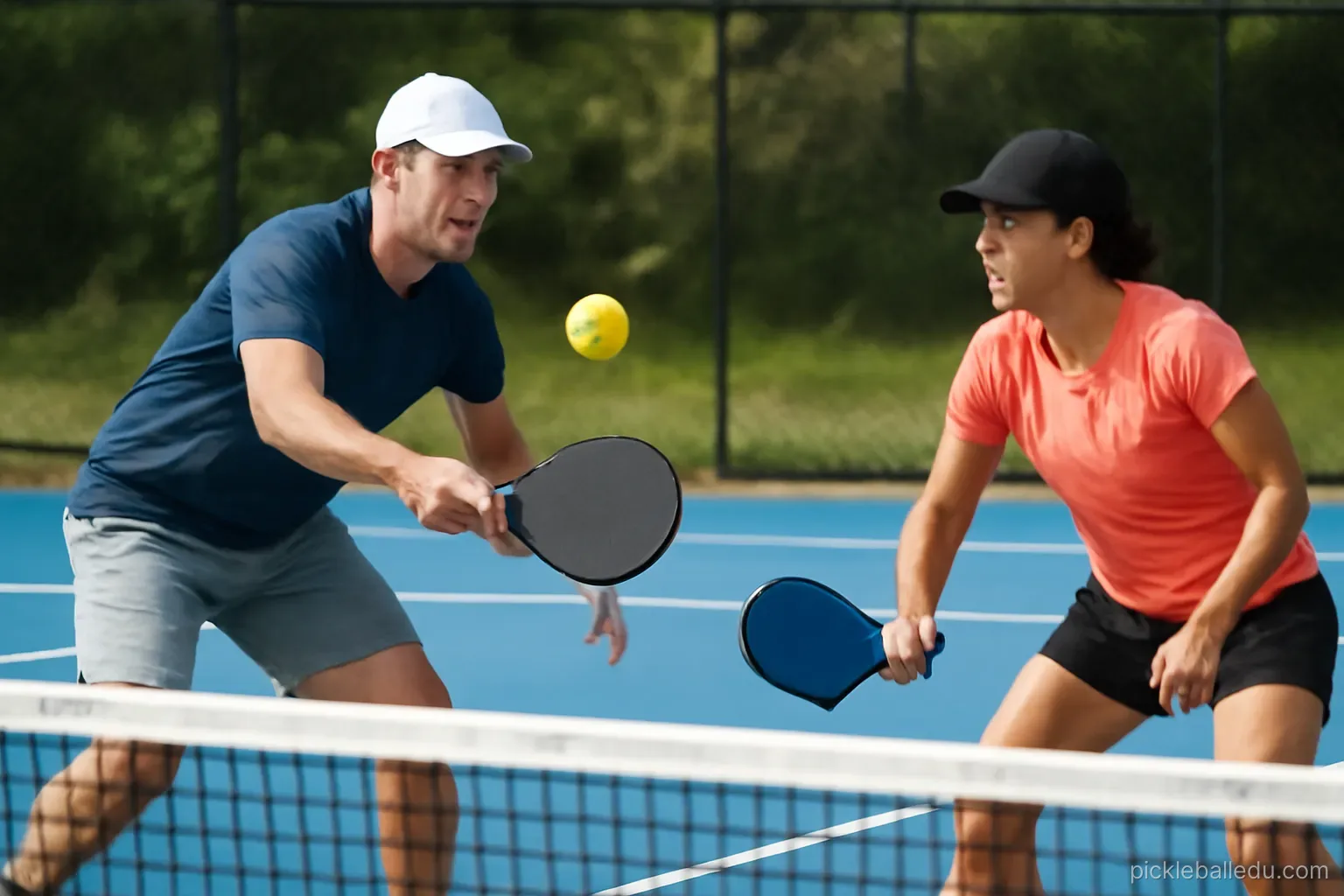
Almost every conflict in recreational pickleball comes back to one thing: somebody thought a ball was in and somebody else thought it was out.
Without officials, the game runs on players calling their own lines — and that system only works if everyone understands how it is meant to operate.
The basic principles
You call the lines on your own side. The ball landing in your half is yours to call. Your opponents call theirs.
The benefit of the doubt goes to your opponent. This is the core of the system and the part most often misunderstood. If you are not sure, the ball is in. Not replayed, not argued — in.
You must see space between the ball and the line to call it out. If you did not clearly see that gap, you do not have an out call.
Call it promptly and clearly. Late calls create problems. Say it loudly enough to be heard and make the standard hand signal.
You cannot call your opponent's side out in your favour. If they call it in, it is in.
You may overrule yourself or your partner in favour of the opponent. This is always allowed and always good sportsmanship.
Why the doubt rule matters so much
Human eyesight is genuinely poor at this. A ball travelling quickly and landing near a line is at the edge of what people can perceive accurately — and studies of officiated sports consistently show that even trained observers make errors.
Which means: if you are certain about every close call, you are almost certainly wrong sometimes. The doubt rule exists precisely because perception is unreliable.
It also removes the incentive to argue. If everyone applies it honestly, close calls resolve in a predictable direction and nobody has to negotiate.
Partner communication
- Agree in advance who calls what. Usually the player with the better view or the one not playing the ball.
- If one partner says out and the other is unsure, the ball is in.
- Do not contradict your partner loudly in front of opponents — quietly suggest overruling in the opponents' favour instead.
- The player nearest the line usually has the worse angle, not the better one. The partner across the court often sees it more clearly.
When you disagree with an opponent's call
This is where sessions go wrong. A few things help:
- Ask once, calmly. Are you sure? Did you see it clearly? Most people will reconsider honestly if asked without hostility.
- Accept the answer. If they confirm, play on. You do not have the right to overrule their side.
- Do not keep bringing it up across later points.
- Do not retaliate with a bad call of your own. This is how a single disagreement becomes a ruined session.
- Let it go quickly — one point in a recreational game is not worth the atmosphere.
If it becomes a pattern rather than one call, address it between games rather than mid-point. Keep it factual and non-accusatory — say you have noticed several calls you saw differently and ask how they are seeing them.
Dealing with a repeat offender
Occasionally you meet someone whose calls are consistently and conveniently wrong.
- Consider that they may genuinely believe them. People are not usually cheating; they are usually convinced.
- Raise it once, privately, between games.
- If nothing changes, stop playing with them. This is the most effective and least confrontational option.
- In organised sessions, tell the organiser rather than confronting repeatedly on court.
- Do not build a reputation as an accuser — being right about calls is worth less than being someone people want to play with.
Other common conflicts
Kitchen faults. The player is often the last to know their foot touched. Your opponents may call it — if they say it clearly and you did not feel it, accept it and move on unless you are certain.
Service faults. Awkward to call because it feels personal. Mention it once, kindly, between points. Most players are unaware and appreciate being told early rather than after a whole session.
Score disputes. The best prevention is calling the score clearly before every serve. If there is disagreement and no agreement can be reached, replaying from the last score both sides agree on is the usual solution.
Balls from other courts. Stop play immediately for safety and replay the point. Do not argue about whether it affected anything.
Hinders and distractions. If something genuinely interfered, call it as it happens, not after you lose the point.
Open play etiquette that prevents conflict
- Introduce yourself at the start. It is much harder to be unpleasant to someone whose name you know.
- Clarify the rules you are playing before starting if the group is mixed in experience.
- Adjust to the level of the game rather than hitting hard at beginners.
- Do not coach unless asked. This is the most common unwanted behaviour in open play.
- Retrieve and return balls properly — roll or hit them back to the server, not vaguely in their direction.
- Thank everyone at the end, including the ones you found difficult.
When it is officiated
- In refereed play, the referee handles faults but line calls in most formats remain with the players.
- Learn the specific format's rules before entering a tournament — they differ.
- You can ask a referee to explain a decision; you generally cannot argue it.
- Applying the same standards in officiated play as in recreational play is the mark of a player people respect.
One thing worth remembering
The honour system is the reason recreational pickleball can happen at all — nobody could staff officials for the number of games played every day.
It survives entirely because most players give away close calls that they could have taken. Every time you do that, you are maintaining the thing that makes the sport work — and you will be remembered for it far longer than for any point you won.
Câu hỏi thường gặp
Who calls the lines?
You call the lines on your own side of the court, and your opponents call theirs. You cannot call your opponent's side out in your favour.
What happens if I am not sure whether a ball was out?
The ball is in. The benefit of the doubt always goes to your opponent, and you must clearly see space between the ball and the line to call it out.
Why does the doubt rule exist?
Because human perception of fast balls near a line is genuinely unreliable — even trained observers make errors. The rule removes the need to negotiate every close call.
What should I do if I disagree with a call?
Ask once, calmly, whether they saw it clearly. Accept their answer, do not raise it again later points, and never retaliate with a bad call of your own.
How do I handle someone whose calls are consistently wrong?
Raise it once privately between games. If nothing changes, simply stop playing with them — it is the most effective and least confrontational option.