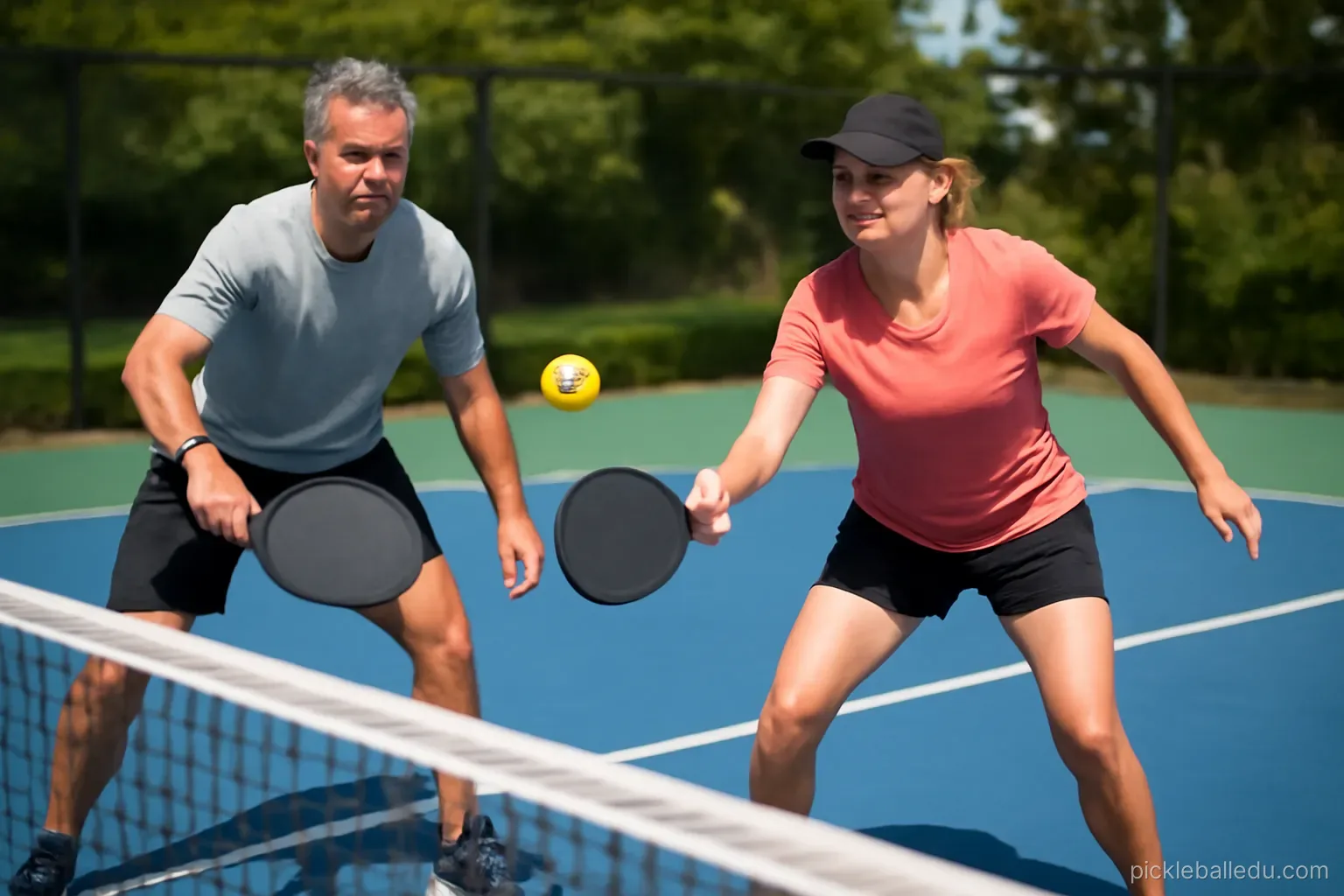
Many readers tell Pickleball Edu they felt overwhelmed when they first looked into pickleball rules. "The two-bounce rule and why it exists" tackles exactly those early uncertainties with concrete, usable guidance.
The article moves from overview to specifics, with a question-and-answer section at the end, so feel free to jump straight to the part that matches your situation. Pickleball has become the fastest-growing racket sport in the world for one simple reason: a complete beginner can sustain real rallies within the first hour on court.
Getting started with pickleball rules
This section repays a few minutes of careful reading. Player ratings from 2.0 to 5.0 let strangers organise fair matches anywhere in the world, and honest self-assessment is the fastest route to genuine improvement.
Open play sessions, where players rotate through a paddle queue, are the social engine of the sport and the easiest way for a newcomer to find their community.
Gear, courts and equipment
Experienced people consistently point to the following. Most pickleball injuries involve ankles and elbows, and nearly all of them trace back to poor footwork habits and skipping a five-minute warm-up rather than to the sport itself.
From backyard pastime to professional tours with televised finals, pickleball now offers a full ladder of competition that any dedicated adult can realistically climb.
Training that actually works
The essentials, in order of priority, look like this.
- The court is roughly a quarter the size of a tennis court, which shifts the game away from raw athleticism and toward reflexes, placement and patient shot selection.
- The non-volley zone, universally known as the kitchen, forbids hitting the ball out of the air while standing inside it, and this single rule creates most of the sport's strategic depth.
- The soft dink shot exchanged over the net looks gentle but is the true dividing line between casual and advanced play, forcing opponents out of position one inch at a time.
- A mid-priced composite paddle with a forgiving sweet spot teaches ball feel far better than a premium carbon paddle designed for players who already generate their own power.
Lessons from experienced players
A little context here prevents a lot of confusion later. The court is roughly a quarter the size of a tennis court, which shifts the game away from raw athleticism and toward reflexes, placement and patient shot selection.
The non-volley zone, universally known as the kitchen, forbids hitting the ball out of the air while standing inside it, and this single rule creates most of the sport's strategic depth.
Core technique and strategy
Here is the part of the picture most people miss. Drilling with purpose beats casual games for improvement: twenty minutes of focused third-shot-drop practice moves your rating faster than three hours of open play.
From backyard pastime to professional tours with televised finals, pickleball now offers a full ladder of competition that any dedicated adult can realistically climb.
Frequently asked questions
How does the kitchen rule work?
You may never volley while touching the non-volley zone beside the net; you can step in to play a bounced ball, but must re-establish position outside before volleying again.
How do ratings like 3.0 and 4.0 work?
The 2.0-to-5.0 scale describes consistency and strategy rather than fitness; rate yourself honestly, play people slightly above you, and your number will follow.
Is pickleball hard on the body?
Gentler than tennis, but quick lateral steps still demand court shoes and a short warm-up; most injuries come from cold starts, not from the sport itself.
How do I find people to play with?
Open play sessions with paddle queues are the standard worldwide: show up, add your paddle to the rack, and the rotation will match you with your level within an hour.
Related articles
Pickleball Edu publishes practical guides on pickleball rules. Explore more in the Rules & Scoring section, or reach us via the contact details in the footer.